Choosing the right engraving machine for wood involves balancing power, accuracy, and ease of use. The following selections focus on reliable wood engraving capability, clear detailing, and versatility for DIY projects, crafts, and small businesses. This guide compares five popular models, helping you find the best fit for wood, plus compatible materials like bamboo, leather, and acrylic. Each option offers distinct strengths in speed, precision, and setup, so you can pick confidently based on your project needs.
Summary of selected products:
- ACMER S1 Laser Engraver 6000mW — Ultra-fine wood engraving with fast speeds, beginner-friendly
- ACMER S1 Laser Engraver 3500mW — Strong, precise for detailed wood work, easy setup
- LONGER Ray5 5W — Large 400x400mm area, 0.08×0.08mm dot, offline capable
- Carverall K15 Pro 5W — Real 5W power, wide material compatibility, compact
- Dremel 120-Volt Engraver — Handheld versatility for quick, portable jobs
ACMER S1 6000mW Laser Engraver — High Precision For Wood

The ACMER S1 6000mW laser engraver delivers high-precision woodworking capabilities with a 6000mW diode laser, 455±5nm wavelength, and 0.01mm repeatable positioning. It supports engraving on wood, bamboo, leather, and more, with a 130x130mm working area and a 2mm focal length for fine detail. With speeds up to 10,000mm/min, it targets vivid, intricate wood designs while maintaining ease of use. Preassembled for quick setup, it’s designed for hobbyists and professionals seeking fast, accurate results.
Key features: 6W class laser, 0.01mm precision, 130x130mm bed, beginner-friendly assembly, supports multiple materials, fast engraving speeds.
ACMER S1 3500mW Laser Engraver — Precise Wood Work

This variant provides robust engraving with 3500mW of diode laser power and a 2mm focal length. It shares the same 130x130mm working area and 0.01mm repeatable positioning accuracy as its higher-powered sibling, making it well suited for detailed wood, acrylic, and coated materials. It also emphasizes 2-in-1 engraving and cutting capacity, enabling precise cuts through thin plywood and MDF. The device arrives mostly preassembled, supporting a quick start for beginners and professionals alike.
Key features: 3.5W diode laser, 0.01mm accuracy, versatile material support, fast start-up, compact 130x130mm bed.
LONGER Ray5 5W Laser Engraver — Large Working Area

The Longer Ray5 5W engraver is built for bigger projects with a 400x400mm working area and a 0.08×0.08mm laser dot. It achieves engraving accuracy around 0.01mm and speeds up to 10,000mm/min, combining strong performance with a larger workspace. It includes offline usage support and a 3.5-inch touchscreen for straightforward operation. This model is a strong choice for users tackling larger wood pieces, signs, and decor items, offering flexibility for advanced DIY jobs.
Key features: 5W laser, 400x400mm bed, 0.01mm accuracy, touchscreen control, offline capability, broad material compatibility.
Carverall K15 Pro 5W Laser Engraver — Real 5W Power
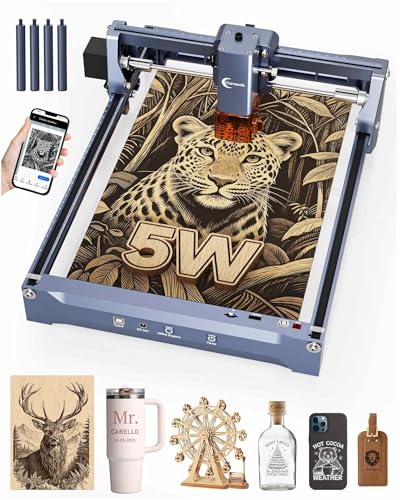
The Carverall K15 Pro emphasizes real 5W+ power for dependable engraving and cutting on wood, coated metals, and other materials. With a 200x300mm near-A4 working area, it balances a compact footprint with practical work capacity. It supports a broad software ecosystem, including CutLabX, LightBurn, and LaserGRBL, and ships with essential safety gear. Its streamlined assembly and 90-second setup appeal to creators who want professional results without heavy downtime.
Key features: True 5W output, 200x300mm area, compatibility with popular software, quick setup, versatile material handling.
Dremel 120-Volt Engraver Rotary Tool — Portable Power

The Dremel engraver offers a handheld approach ideal for quick personalization on wood and other materials. It features a 7,200 strokes-per-minute motor and a five-position depth dial, enabling fine lines or deeper grooves. While not a large-format machine, its portability makes it convenient for on-the-go projects, detailing small items, or add-ons to larger setups. The tool supports a variety of materials and textures, complementing stationary engravers in a mixed-workflow studio.
Key features: Handheld portability, 7,200 SPM, adjustable depth, broad material compatibility, easy bit changes.
Buying Guide: What to Consider When Choosing a Wood Engraver
- Power and material reach: Higher wattage enables deeper engravings and faster cutting through wood, but may require more safety considerations and ventilation. For thin plywood and craft wood, 3–5W models often suffice; for thicker boards or deeper cuts, 5–10W units are more efficient.
- Working area: Larger beds support bigger projects like signs or furniture accents, but require sturdier tables and more space. Smaller areas suit precise detailing on small parts or jewelry.
- Precision and repeatability: Look for sub-0.01mm accuracy if your designs include fine text or tiny patterns. Check focus length and stabilization features to minimize drift during longer runs.
- Software compatibility: Ensure compatibility with common tools (LightBurn, LaserGRBL, CutLabX) and ease of import of vector images (SVG, DXF). Consider whether offline operation is important for your workflow.
- Ease of setup: Preassembled or near-ready machines reduce learning curves. Beginners often benefit from machines advertised as beginner-friendly with simple head installation.
- Materials supported: Wood types vary in density; verify that your intended materials (wood, bamboo, acrylic, leather) are explicitly supported. Some devices excel with metals or ceramic through specialized settings or accessories.
- Safety and accessories: Protective eyewear, safety enclosures, and proper ventilation are important. Rotary attachments, air assist, and sample materials can expand versatility for cylindrical items and cleaner cuts.
- Expandability and support: Check for available spare parts, replacement lenses, and reputable customer support. A robust user community helps with troubleshooting and project ideas.
- Price-to-performance ratio: Compare initial cost with potential project workload, maintenance needs, and software subscriptions. Higher upfront costs may offer longer-term value through faster throughput and durability.
Across these options, users should align features with intended projects—small, detailed wood engravings may benefit from 3.5–6W devices with a 130x130mm bed, while larger decor projects or signs may require 5W+ power and bigger working areas. Software flexibility, safety considerations, and ease of use are equally important to ensure consistent results and a smooth learning curve for beginners and professionals alike.