Choosing the right glass grinder is essential for precise edge work in stained glass projects. The following selections cover budget-friendly models, professional-grade tools, and portable options suitable for hobbyists and classrooms alike. Each entry highlights core capabilities, motor power, grinding bits, and ease of use to help you compare performance across popular brands.
| Product | Brand | Key Features |
|---|---|---|
| Inland Craft WizCG Glass Grinder | Inland Craft | Two diamond bits sizes; 115V motor; budget-friendly |
| Inland Craft WizlingCG Glass Grinder | Inland Craft | Lightweight; 16 oz-in torque; compact for portability |
| Stained Glass Grinder with 5/8″ & 1″ Bits (Godora) | Godora | Automatic water flow; two bit sizes; DIY-friendly |
| Godora Stained Glass Grinder Kit | Godora | Dual-bit set; water-suction base; versatile |
| 2025 Upgrade Stained Glass Grinder Kit | Zlshmoee | Five diamond bits; dual-layer table; 65W motor |
Inland Craft WizCG Glass Grinder

The WizCG from Inland Craft is positioned as a budget-friendly stained glass grinder suitable for beginners and hobbyists. It provides essential grinding capability for shaping and edging glass edges, making it a practical entry point for stained glass projects. The grinder ships with two diamond bits (3/4″ and 1/4″ diameter), enabling quick access to two bit sizes without frequent replacements. A 115V motor delivers 30 oz-in torque, offering reliable power for routine glass and lapidary tasks. This model emphasizes straightforward operation and value-for-money without compromising basic performance.
Designed to handle standard edging and shaping chores, the WizCG balances accessibility with enough torque to manage common glass shapes. The included dual-bit setup supports common edge work, while the overall construction aims for durable, long-term use in home studios or classrooms. For those starting stained glass work, it provides a solid foundation to learn proper grinding technique while keeping upfront costs reasonable.
Inland Craft WizlingCG Glass Grinder

The WizlingCG is described as an economical choice with a focus on precision for edging and shaping stained glass. It uses a 16 oz-in torque motor operating at 3,500 rpm, delivering ample power for professional tasks and serious glass hobby projects. Its lightweight ABS construction contributes to portability and ease of handling, making it suitable for small workshops or on-the-go use. The combination of budget-conscious pricing and sturdy performance makes it a popular option among learners and intermediate crafters.
With its compact profile and reliable motor, the WizlingCG supports a range of glassworking tasks—from basic bevels to more intricate edge work. The tool is intended to be a practical, everyday grinder that balances cost with productivity. The design prioritizes user-friendly operation and reasonable durability for ongoing stained glass projects in varied settings.
Stained Glass Grinder By Godora (5/8″ & 1″ Bits)
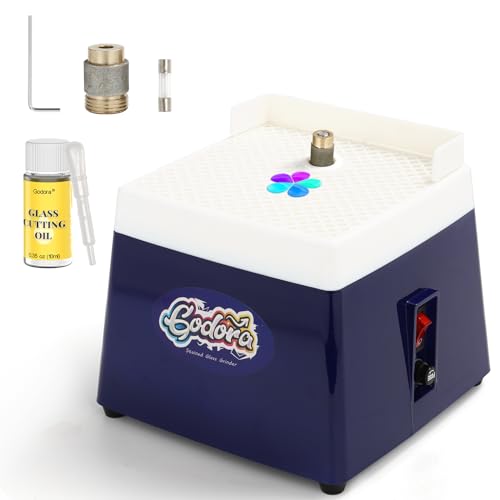
This Godora model emphasizes a strong DIY orientation with two grinder bit sizes (5/8″ and 1″). A 4200 RPM DC motor provides robust performance for shaping and edge work on stained glass. An automatic water-suction feature integrated into the base helps keep the grinding head lubricated and reduces the need for constant sponge intervention. This simplifies operation, lowers cleanup requirements, and supports longer grinding sessions with less interruption.
The unique spiral base design aids water management during grinding, promoting smoother cuts and cleaner edges. The kit-friendly setup allows users to adapt to different glass thicknesses and edge profiles by swapping grinder heads, which is beneficial for varied projects such as bevels and curves. The tool is positioned as a versatile option for home studios and classroom environments alike.
Godora Stained Glass Grinder, Mini Kit

This Godora mini kit highlights a strong motor (4200 RPM DC) and dual bit sizes (5/8″ and 1″), designed to help users achieve flat, curved, rounded, or bevel shapes with glass. The base features a water-suction system to simplify maintenance and keep the grinding head clean during operation. A safety-conscious design with a waterproof housing reduces electrical risks during use, which is valuable for learners and hobbyists working in varied environments.
The kit approach offers flexibility for different project scales, whether focusing on small decorative pieces or larger stained glass panels. The combination of bit variety, water management, and a portable form factor makes this a practical option for beginners looking to expand their edge-work capabilities without committing to a larger bench grinder.
2025 Upgrade Stained Glass Grinder Kit
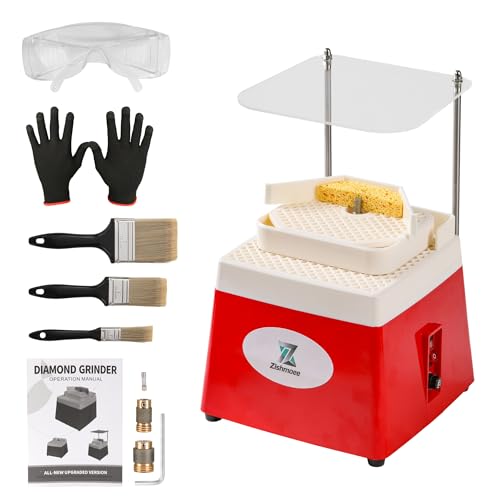
This kit features a five-bit diamond set (5/8″, 1″, 3 sizes total) and a dual-layer worktable with a water chamber. A 65W motor delivers 4200 RPM for efficient grinding, plus a quick-release design to reduce jamming during storage. The water-fed system minimizes debris buildup and supports consistent results across varied glass materials. The kit targets users who want a comprehensive package for more complex projects and professional-like results in a compact, portable form factor.
In addition to the five-diamond-bit set, the dual-layer workspace provides a stable grinding platform for handling larger or irregular pieces. The safety features and water management design are intended to keep operations smoother and cleaner, which can be advantageous for classroom settings or personal studios seeking higher-end performance without stepping up to full industrial equipment.
Buying Guide: Key Purchase Considerations
- Grinding power and RPM: Look for motors in the 3,000–4,200 RPM range with torque sufficient for frequent edge work on glass and ceramics. Heavier-duty grinders suit larger projects, while lighter, lower-power models are more portable for small pieces.
- Bit variety: A broader set of diamond bits supports a wider range of shapes (flat, bevel, curve) and materials. Consider sets that include multiple sizes and quick-change capabilities to reduce downtime.
- Water management: Systems that feed water to the grinding head (manual or automatic) help reduce dust, cool the bit, and prolong bit life. Sponges and manual watering add cleanup time and mess.
- Weight and portability: If you plan to move between workspaces or travel to classrooms, lighter, compact units offer better portability, though they may trade off some power.
- Table design and stability: A stable work surface with a reliable bench or stand improves accuracy, especially for small bevels and tight curves. Dual-layer or larger tables can accommodate bigger pieces.
- Durability and maintenance: Look for rust-resistant materials and accessible parts. A design that minimizes jamming and is easy to clean will save time in busy studios.
- Safety features: Insulated housings, safety switches, and good electrical isolation reduce risk during operation, particularly in classrooms and learning environments.
- Intended use: Beginners may prioritize budget-friendly models with essential features, while hobbyists and professionals might seek higher RPM, larger tables, and broader bit sets for more complex projects.
Across these options, readers should balance initial cost against long-term performance, maintenance needs, and the specific project scope—whether creating small decorative stained glass accents or larger panel work. The selections reviewed provide varied approaches, from compact, entry-level grinders to feature-rich kits designed for more demanding workflows. Always verify current availability and compatibility with preferred bit sets before purchasing.