Choosing the right plaster for ceramic molds affects detail, durability, and ease of use. The following selections are popular among ceramicists and hobbyists for creating accurate casts, bowls, dioramas, and decorative pieces. Below you’ll find five well-regarded plaster products, each with distinctive strengths—from ultra-fine detail to quick-setting hardening—plus practical buying tips to help you compare options.
Summary table of selected products:
| Product | Brand | Best For | Notes |
|---|---|---|---|
| Perfect Plaster Pottery & Ceramic Casting Material | Perfect Craft | Detailed casts, color blending, quick set | Non-toxic, mixes with water, 30-45 minute cure |
| Falling in Art 5 LB Plaster of Paris Powder | Falling in Art | Versatile crafts, quick setting | Non-toxic, 3:4 water to plaster ratio, fast dry |
| USG No.1 Pottery Plaster- 10 lbs | USG | Fine detail, large-scale projects | Enhanced workability, smooth texture |
| Ultracal 30 Plaster for Mold Casting | Capital Ceramics | Patterns, sculpture, high-detail casts | Dense, quick-setting, not for outdoor use |
| MOLDMASTER Plaster of Paris Powder Ultra White | MOLDMASTER | Fine details, durable works | Ultra white, bubble-free detail |
Perfect Plaster Pottery & Ceramic Casting Material

The Perfect Plaster formula is designed to yield highly detailed casts from ceramic molds and other plaster forms. It doubles as a versatile material for creating plaster molds, carving sculptures while the plaster is setting, and even producing colored chalk with a simple mix. The product is marketed as easy to mix and use, with a typical hardening window of 30-45 minutes. This makes it suitable for projects that require precise detail without a long waiting period, and its non-toxic formulation is convenient for classroom or home studio environments.
Key considerations: For ceramic work, this plaster offers a balance between detail capture and workable setting time. Its compatibility with water-based mixing makes it straightforward to adjust consistency for different mold geometries. Keep in mind that working times can vary with temperature and humidity, so test a small batch if you’re tackling a complex mold.
Falling in Art 5 LB Plaster of Paris Powder

Falling in Art’s 5-pound plaster powder is positioned for safe, detailed casting with a straightforward mixing ratio of three parts water to four parts plaster. It sets quickly, with a 3-4 minute initial solidification and about 30 minutes to a firm finish, making it practical for multiple molds in a single session. The product is marketed as non-toxic and suitable for a range of crafts, including masks, dioramas, jewelry, and home décor pieces. The compact size is convenient for hobbyists and educational settings, while the stated safety profile suits classrooms and workshops.
Key considerations: Quick setting is advantageous for iterative workflows, but you’ll want to manage moisture and humidity to avoid premature hardening. Because it’s designed for a broad array of applications, test with a sample mold to confirm surface finish and detai l retention on your specific designs.
USG No.1 Pottery Plaster- 10 lbs
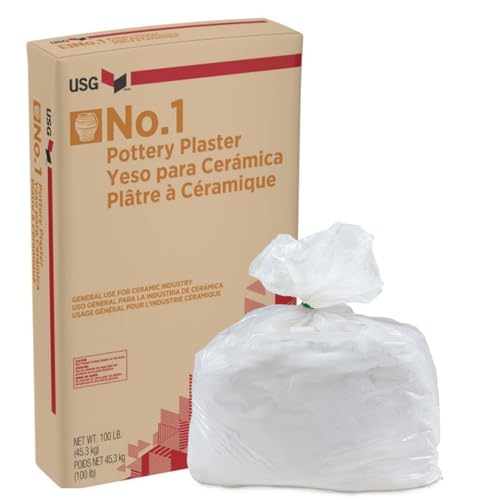
USG No.1 Pottery Plaster is a staple choice for ceramicists who demand fine detail and reliable performance. Marketed as an artist’s choice for ceramics, large-scale projects, and dinnerware, it emphasizes easy workability, a smooth texture, and strong detail retention. Its formulation aims to offer high strength and resistance to cracking, which makes it suitable for intricate molds and durable final casts. This plaster’s balance of ease of use and robust performance makes it a general-purpose option for many ceramic casting tasks.
Key considerations: If you’re working with very delicate or ultra-fine features, test your molds to ensure edge retention during demolding. For larger pieces, the combination of workability and strength can help maintain consistency across batches. Storage away from humidity will help preserve its set properties over time.
Falling in Art 1lb Plaster of Paris Powder

The 1-pound option from Falling in Art offers a compact starter choice for testing molds or small, detailed ceramic components. It shares the brand’s emphasis on safety and straightforward mixing, with similar ratios and curing windows to its larger counterpart. This variant is particularly suitable for educational demonstrations, small decorative pieces, or prototyping a mold design before committing to a larger batch. It’s compatible with a variety of surface finishes and can be painted after curing.
Key considerations: The small quantity means frequent restocking for active studios, but it provides a low-risk way to experiment with new mold shapes. Ensure precise measurement for reliable setting times, and store sealed to prevent moisture uptake that could affect set consistency.
Ultracal 30 Plaster for Mold Casting

Ultracal 30 is a high-density plaster designed for detailed patterns, figurines, and commercial casts. It’s known for quick setting and a dense, durable finish suitable for molds and sculpture. The product is described as not intended for outer or mother molds and not recommended for outdoor use, which aligns with its use in controlled environments where fine detail and clean demolding are priorities. It’s presented as a full-strength gypsum plaster without fillers, offering reliable performance for precise ceramic work.
Key considerations: Ultracal 30’s density improves edge definition but can be heavier and more brittle if mishandled. Temperature and humidity can influence cure times, so acclimate the workspace for best results. It’s well-suited for molds that demand strong, sharp detail and durability in the final piece.
MOLDMASTER Plaster of Paris Powder Ultra White

MOLDMASTER Ultra White plaster powder emphasizes fine detail and a clean, bright finish. Marketed for crafts, sculpture, and home décor, its ultra-white composition can highlight intricate textures on ceramic molds and finished casts. The focus on finest details suggests suitability for projects where surface presentation and precision are critical. The powder is positioned as easy to mix and capable of producing bubble-free results with a high hardness after set.
Key considerations: Ultra-white blends are desirable for bright, crisp surfaces but may require careful color management if you plan to paint or glaze soon after demolding. Always measure the water-to-plaster ratio accurately and consider a small batch test to dial in consistency for your mold geometry.
Buying Guide: Key Purchase Considerations For Plaster Molds In Ceramics
- Detail vs. strength: Denser plasters like Ultracal 30 and USG No.1 favor sharp detail, while mixes designed for easy workability may be preferable for beginners or large, forgiving molds.
- Setting time: Quick-setting formulations (around 30 minutes) speed up workflows but require steady workspace conditions. Slower sets can be advantageous for complex demolds or large casts.
- Mix ratios and curing: Most plasters use a water-to-plaster ratio; testing small batches helps you predict setting behavior in your climate and mold dimensions.
- Safety and handling: Look for non-toxic formulations if you’ll be working in classrooms or with younger students. Proper ventilation and protective gear are advised for all powder materials.
- Color and finish: Ultra-white plasters yield brighter surfaces that polish well but may need sealing or painting. Surface texture varies by product and particle size.
- Mold compatibility: Some plasters are recommended specifically for molds while others are better for standalone sculptures. Read product notes to confirm suitability for your ceramic process.
- Storage and shelf life: Keep powders in cool, dry places to prevent hydration and clumping. Seal containers tightly after use.
When choosing among these options, consider your typical projects: the scale of your ceramic pieces, the level of detail required, your workshop environment, and how quickly you need to move from mold creation to finished glaze. A combination approach—using a detail-oriented plaster for fine work and a faster-setting option for rapid prototyping—can offer flexibility for diverse ceramic tasks.