For quilters and fabric crafters, a rotating cutting mat can boost precision and comfort by keeping your project stationary while your blade moves. This guide reviews top rotating mats, focusing on self-healing surfaces, smooth rotation, grid readability, and durability. Each option below supports accurate angle cuts and multi-layer fabric work, helping you streamline quilting, sewing, and craft projects.
| Product | Brand | Size | Notes |
|---|---|---|---|
| Calibre Art Rotating Self Healing Cutting Mat 14×14 | Calibre Art | 14 x 14 inches | Smooth rotation; self-healing; EN 71-3 compliant |
| Calibre Art Self Healing Rotating Cutting Mat 18×18 | Calibre Art | 18 x 18 inches | Large work area; smooth rotation; self-healing; EN 71-3 |
| OLFA 12″ x 12″ Rotating Cutting Mat | OLFA | 12 x 12 inches | 360° rotation; self-healing; grid lines |
| Fiskars Rotating Cutting Mat – 14″ x 14″ | Fiskars | 14 x 14 inches | Self-healing; precision grids; ergonomic pairing with cutters |
| Creative Grids Self Healing Rotating Mat 14in x 14in | Creative Grids | 14 x 14 inches | Self-healing; grid-focused design |
Calibre Art Rotating Self Healing Cutting Mat 14×14
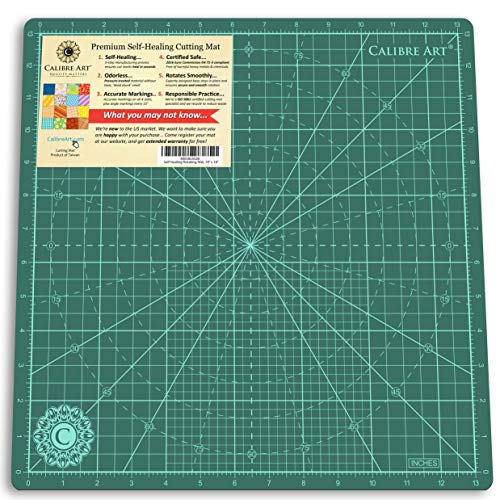
The 14×14 Calibre Art rotating mat provides a smooth rotating mechanism with a non-detachable base and a cutting surface that spins with ease. Its self-healing surface reseals minor cuts, extending blade life and maintaining a consistently smooth workspace. The surface uses an EN 71-3 compliant compound, aligning with stringent safety standards for materials used in craft environments. This mat balances compact footprint with enough room for small-to-medium quilting blocks and intricate fabric cuts.
Calibre Art Self Healing Rotating Cutting Mat 18×18

The 18×18 Calibre Art mat expands workspace for larger quilting blocks, garment panels, and multi-layer projects. Its rotating mechanism remains smooth while the base stays securely attached. Like the 14×14 model, it features a self-healing surface for long-term use and an EN 71-3 compliant surface compound, ensuring safer handling of fabrics and blades over time.
OLFA 12″ x 12″ Rotating Cutting Mat

OLFA’s 12×12 rotating mat is designed for tight spaces and detailed work. It rotates 360 degrees on a stationary base, allowing precise angles without moving the fabric. The self-healing surface reseals minor cuts, prolonging blade life and protecting underlying surfaces. The compact 12×12 size is ideal for small quilting blocks, appliqué, and intricate fabric cutting where maneuverability matters.
Fiskars Rotating Cutting Mat – 14″ x 14″
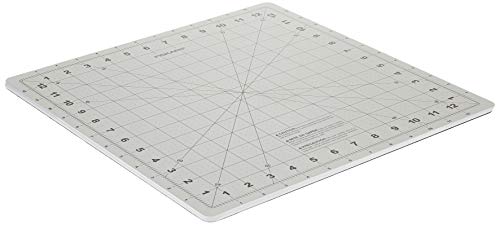
Fiskars pairs a 14×14 grid with a durable, self-healing cutting surface designed for everyday quilting and craft tasks. The mat supports easy alignment with clearly marked grids and bias lines at 30, 45, and 60 degrees, aiding precise angle cuts. Its rotating capability reduces wrist strain by letting you rotate the fabric rather than repositioning the entire project.
Creative Grids Self Healing Rotating Mat 14in x 14in

The Creative Grids 14×14 rotating mat emphasizes self-healing properties and grid clarity for accurate quilting blocks. Its light-to-midweight surface design helps extend blade life while providing a stable base for precise cuts. The mat’s rotation feature suits detailed block work and square-based layouts, offering a reliable option for quilters seeking predictable turns during projects.
Buying Guide: Key Considerations For Rotating Cutting Mats
- Size and workspace: Choose a size that matches your typical quilt blocks. Smaller mats are excellent for blocks and appliqué, while larger mats support bigger projects and multi-layer cutting.
- Rotation mechanism: Look for a smooth, stable 360-degree rotation with a non-detachable base. A secure base reduces wobble and blade drift during cutting.
- Self-healing surface: Self-healing surfaces reseal minor cuts, increasing mat longevity and reducing blade dulling. Confirm the material’s density for longevity and compatibility with rotary blades.
- Grid visibility and markings: High-contrast grid lines, angle guides (30°, 45°, 60°), and inch measurements support precise cuts. Some mats include additional markings for common quilt blocks and triangles.
- Material safety: Mats with EN 71-3 compliant compounds meet safety standards for t—materials used in crafting and children’s products. This is a consideration for homes with children or shared craft spaces.
- Durability and maintenance: Consider edge wear resistance and how easily the surface cleans. A mat that resists warping maintains accuracy over time and with temperature changes.
- Storage and portability: If you travel to classes or workshops, a lighter, more compact mat may be advantageous, though larger mats offer more cutting area when stationary.
- Compatibility with tools: Ensure compatibility with common rotary cutters and rulers. Some mats perform best with specific brands or blade types, so verify alignment with your toolkit.
- Price-to-performance balance: While premium mats often deliver smoother rotation and longer lifespans, evaluate whether the size, features, and durability justify the cost for your workflow.