Sublimation paper is essential for high-quality transfers from inkjet printers to textiles and hard surfaces. This guide highlights five reliable options designed for inkjet sublimation, emphasizing transfer vividness, drying speed, and compatibility. Whether you’re crafting T-shirts, mugs, or home décor, these papers help preserve color accuracy and print detail while withstanding heat and washing. Explore each product’s strengths and how they align with common sublimation projects.
| Product | Key Benefit | Typical Use |
|---|---|---|
| HTVRONT Sublimation Paper 150 Sheets (8.5 x 11, 120gsm) | High transfer rate and fast drying | Apparel, mugs, home décor |
| A-SUB Sublimation Paper 110 Sheets (8.5 x 11, 125g) | Excellent transfer ≥98% | White or light polyester fabrics, ceramics, tiles |
| Hiipoo Sublimation Paper 110 Sheets (8.5 x 11, 120g) | Instant dry, true color, strong ink saving | Mugs, T-shirts, light fabrics |
| A-SUB Sublimation Paper 120GSM (110 Sheets, 8.5 x 11) | High transfer efficiency and durability | Lighter and coated hard surfaces |
| Cricut Sublimation Paper 100 Sheets (8.5 x 11, 120gsm) | Vivid transfers, peel-proof and wash-proof | Full-color projects on textiles and hard goods |
HTVRONT Sublimation Paper 150 Sheets

HTVRONT 8.5 x 11 inch sublimation paper provides a high transfer rate and vibrant colors, with over 98% transfer efficiency. The 120gsm weight supports sharp lines and strong ink hold, while the paper’s dry-time efficiency minimizes waiting between print and press. It’s designed to withstand repeated washes, high temperatures, and sunlight without cracking or fading, making it suitable for durable T-shirts, mugs, and home décor items. The paper’s flatness helps prevent curling, and its compatibility with most inkjet printers supports a wide range of sublimation projects.
Key features include quick-dry performance, strong color clarity, and wide applicability—from textiles to ceramic mugs and beyond. This paper is noted for good lay-flat performance, which reduces jams and misfeeds in many consumer inkjet setups. If you’re coordinating multiple craft sessions or seasonal designs, HTVRONT’s large pack helps maintain consistency across batches.
A-SUB Sublimation Paper 8.5×11 Inch 110 Sheets

This A-SUB option emphasizes fast drying and a high transfer rate, suitable for white or light-colored polyester fabrics and coating-friendly hard surfaces like tiles and ceramic items. The set is designed for a broad range of substrates, including phones cases and metal plates when those items are properly coated. Its emphasis on minimal fracturing and reliable color transfer makes it a practical choice for hobbyists and small businesses seeking consistent results across several project types.
Its packaging and weight are balanced to minimize paper jam and curling, helping smaller printers maintain smooth operation. The product notes suggest compatibility with sublimation inks and specific substrate limitations, so verifying printer compatibility and substrate color is advised before use.
Hiipoo Sublimation Paper 8.5×11 Inch

Hiipoo’s 110-sheet pack delivers instant-dry performance with an ultra-high transfer rate, supporting precise color reproduction and ink savings. The 120gsm paper is engineered for flatness and reduced curling, which helps printers feed sheets more reliably. The product manual highlights a simple workflow: print with sublimation ink, mirror image, set heat press, and transfer, then peel once finished. The user notes indicate a distinct white printing side with a pink back, aiding correct orientation during setup.
Hiipoo emphasizes ease of use and compatibility with common inkjet sublimation workflows. The paper’s thickness and elasticity help resist creasing, while its strong color retention supports designs across mugs, T-shirts, and light fabrics. This makes it a flexible option for projects that demand clear detail and quick turnaround times.
A-SUB Sublimation Paper 8.5×11 Inch 120GSM, 110 Sheets
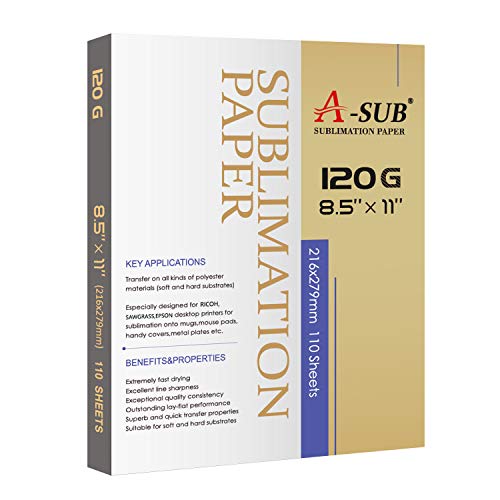
This A-SUB 120GSM paper emphasizes high transfer efficiency (over 98%) and vibrant color output, suitable for light-colored fabrics and various coated surfaces. It’s designed to minimize bleed and paper jams, with a focus on maintaining print fidelity from image to finish. The range supports numerous craft uses—from T-shirts and bags to mugs and other coated items—making it a versatile choice for variable sublimation projects.
The product highlights include durable color results and effective ink transfer, with a wide application spectrum. Users should ensure substrates are compatible (usually white or light polyester with adequate coating) to achieve the best outcomes. The paper’s rigidity helps keep prints flat through the heat press, contributing to clean, sharp transfers.
HTVRONT Sublimation Paper 30 Sheets

This smaller HTVRONT pack targets quick-start projects with easy transfer and strong color reproduction. The 120gsm weight remains a consistent feature, supporting durability across repeated uses. The product notes emphasize fast drying and ease of transfer for tumblers, T-shirts, and mugs, with a focus on minimizing curling and jam risk in standard inkjet printers. It remains compatible with a wide range of sublimation inks and hosts a print-back logo to assist print-side orientation.
For users testing new substrates or building a small catalog of gifts, this 30-sheet option offers an accessible entry point to evaluate color fidelity and transfer performance before committing to larger packs. The emphasis on strong transfer and printer compatibility makes it suitable for varied projects within a compact starter kit.
Printers Jack Sublimation Paper 100 Sheets
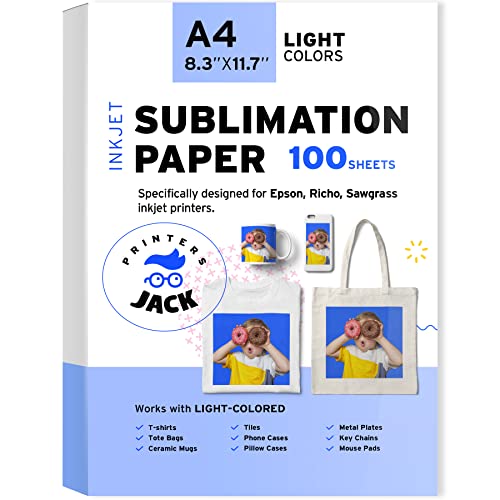
Printers Jack offers a versatile sublimation paper designed for use with light-colored polyester fabrics and coated items. The package includes 100 sheets of 8.3 x 11.7 inches. The brand emphasizes proper use with sublimation inks and a heat press, cautioning against the use of regular inks and irons. The guide also notes compatibility with various printers (including some Epson, HP, Canon, and Sawgrass variants) given the printer’s piezoelectric criteria. The paper’s glossy finish and 70% polyester guidelines help predict transfer results for T-shirts, mugs, and ceramics.
Designers and crafters benefit from its large pack size and the emphasis on avoiding common issues like ink bleed or back-side staining. The sheets are designed to pass through standard sublimation printers smoothly, which supports faster production for small shops or home-based studios.
Buying Guide: Key Considerations For Choosing Sublimation Paper
- Printer compatibility: Confirm your inkjet sublimation printer supports sublimation inks and that the paper is listed as compatible with your printer model and printhead type.
- GSM weight and thickness: Most high-quality sublimation papers range from 110-125gsm. Heavier papers resist curling and deliver sharper transfers on curved or textured blanks.
- Transfer rate and drying time: Higher transfer rates plus fast-dry formulations reduce waiting time and improve color fidelity, especially for vibrant designs on fabrics.
- Substrate compatibility: White or light-colored polyester fabrics and coated hard surfaces (ceramics, mugs, metals) yield the best results. Always check substrate requirements for each product.
- Ink compatibility and color accuracy: Ensure the paper works with your sublimation inks and that the recommended heat press temps align with your projects to avoid color shifts.
- Flatness and curling: Papers designed to maintain flatness reduce jams and improve transfer consistency, particularly on longer runs.
- Package size and value: For hobbyists, starter packs (30-110 sheets) let you test performance; for small businesses, larger packs ensure consistency across multiple projects.
- Cost per sheet: Compare price per sheet across brands to understand ongoing costs, especially for high-volume production.
Overall, selecting sublimation paper involves balancing transfer quality, substrate compatibility, and printer workflow. The five options covered above provide a spectrum of weights, sheet counts, and substrate versatility to support both casual hobby projects and more demanding craft workflows. When testing a new brand, conduct a small pilot run on a couple of substrates to gauge color fidelity, wash durability, and ease of use before scaling up production.